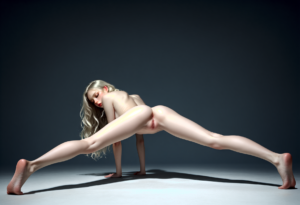
The term figure study is sometimes used in photography,[3] but does not seem to be clearly defined as different from nude photography in general, given the inherently finished nature of the medium. Photography students may do work that is for educational purposes, and an artist may take photographs with the intent of using them as references for paintings, but the terms figure study or nude study is usually not limited to these preparatory or educational photos. This usage may have begun in the 19th century, when some photographers called their nude images “studies for artists” merely to evade the censors.
That history, however, does not fully capture how many photographers have actually approached figure studies in practice.
Some photographers produce artistic nudes—sometimes erotic, sometimes not—with the specific intent of exploring pose, proportion, lighting, and physical tension in ways that echo classical figure drawing and sculptural study. These images are less concerned with narrative or titillation and more focused on how the human body occupies space under deliberate, often unfamiliar conditions. Unnatural or transitional poses, extreme lighting angles, and emphasis on form over personality are common characteristics. The goal is not to idealize the body, but to examine it.
To be clear: AI-generated images should not be used as literal figure studies in the academic or anatomical sense. Current AI image models—including those used to generate Alena—do not reproduce human anatomy with the reliability or structural accuracy required for true instructional study. Subtle distortions, proportional inconsistencies, and anatomical shortcuts remain inherent to the medium.
That said, the images presented here are best understood as conceptual or photographic-style figure studies. They reflect an approach long used by photographers: constructing images that emphasize pose, lighting, and bodily structure in ways that could be easily replicated in a physical studio with a human model. In that sense, these works align more closely with photographic figure-study traditions than with fantasy illustration or narrative character art.
They are not references for anatomy textbooks.
They are examinations of form, restraint, and visual intent—filtered through a modern, synthetic medium.
This section will be added to periodically, so please check back for updates.